
Cash Discount vs. Surcharging: What’s the Real Difference?
You want to stop paying credit card processing fees, but the terminology is confusing. You hear about “surcharging,” “cash discounting,” and “dual pricing,” and they all sound the same. But when comparing cash discount vs. surcharging, getting it wrong can cost you customers and lead to hefty fines.
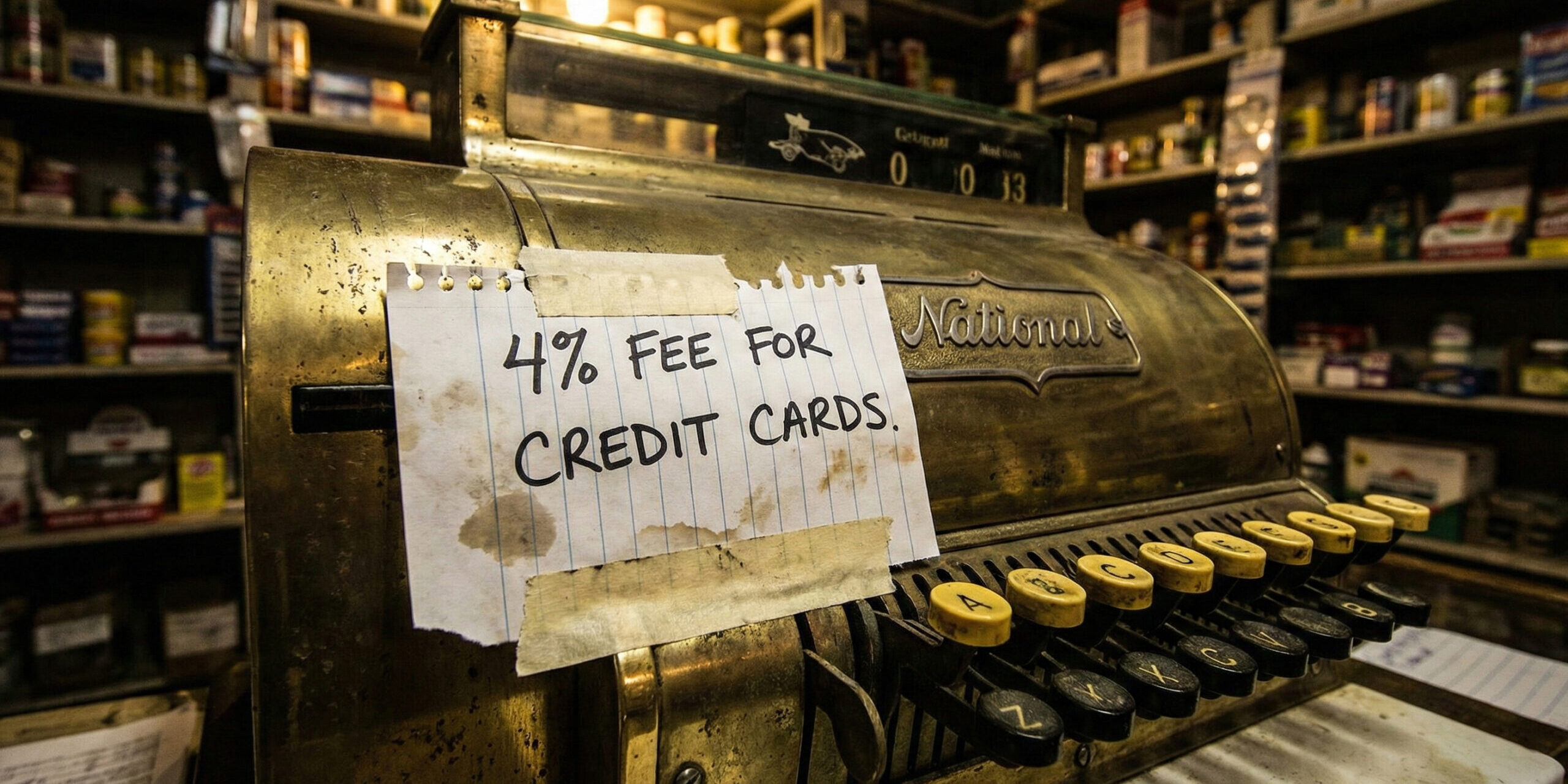
Many business owners accidentally break the law because they don’t understand the rules. They simply tape a sign to the register saying “4% Fee on Cards” and think they are safe. They aren’t.
This guide explains exactly how these programs differ and which one protects your business.
The Core Definitions
To make the right choice, you first need to know exactly what is happening at the Point of Sale (POS). The difference lies in how you present the price to the customer.
What is a Surcharge?
A surcharge is an added fee. You display a price on the shelf (e.g., $10.00), but when the customer pays with a credit card, you add a percentage on top (e.g., $10.40).
-
The Psychology: It feels like a penalty.
-
The Risk: The customer feels punished for using their preferred payment method.
What is a Cash Discount?
A cash discount creates a reward. You price your items to include the service cost (e.g., $10.40). If the customer pays with cash, you remove that cost and give them a lower price (e.g., $10.00).
-
The Psychology: It feels like a bonus.
-
The Benefit: The customer feels smart for saving money.
The Legal Differences
This is the most important part of the cash discount vs. surcharging debate. While they achieve a similar financial result for you, the law treats them very differently.
Surcharging is restricted. Credit card surcharging is heavily regulated. It is currently illegal in several states, including Connecticut and Massachusetts. Even where it is legal, you must:
-
Register with Visa and Mastercard 30 days in advance.
-
Cap the fee (usually at 3%).
-
Never surcharge a debit card (this is a common federal violation).
Cash Discounting is federally legal. Under the Durbin Amendment, you have the right to offer a discount for cash payments in all 50 states. Because you are lowering the price rather than raising it, you bypass the strict surcharge regulations.
Customer Perception: Honey vs. Vinegar
Think about how you like to shop. Do you prefer paying an “extra fee” or getting a “special discount”?
When you analyze cash discount vs. surcharging, the cash discount model wins on customer experience.
-
Surcharging creates friction. It forces the customer to pay more than the sticker price.
-
Cash Discounting (often implemented as Dual Pricing) offers transparency. The customer sees the cash price and the card price side-by-side. They hold the power to choose.

Which Method is Right for You?
If you want the safest, most compliant route, a true Cash Discount or Dual Pricing program is the superior choice.
It allows you to:
-
Offset 100% of your processing costs.
-
Avoid legal headaches regarding state bans.
-
Keep customers happy by offering them a choice rather than a penalty.
Conclusion: Choose the Compliant Path
Understanding the battle of cash discount vs. surcharging is the first step toward a more profitable business. While surcharging is a “penalty” that comes with legal baggage, cash discounting is a “reward” that keeps your business compliant and your customers satisfied.
Don’t risk your reputation with a handwritten note and a calculated fee. Upgrade to a system that handles it all automatically.
Ready to switch to a compliant Zero Fee model? Contact World VIP Merchant Solutions today to upgrade your POS.